
Microdosing psilocybin mushrooms has gained popularity across Canada as more individuals seek enhanced creativity, improved mood, and mental clarity without an overwhelming psychedelic experience. With various microdose products available, choosing between mushroom gummies vs capsules or other shroom edibles can seem daunting.
Here, we delve into each option—gummies, capsules, and mushroom chocolates—to guide your decision.
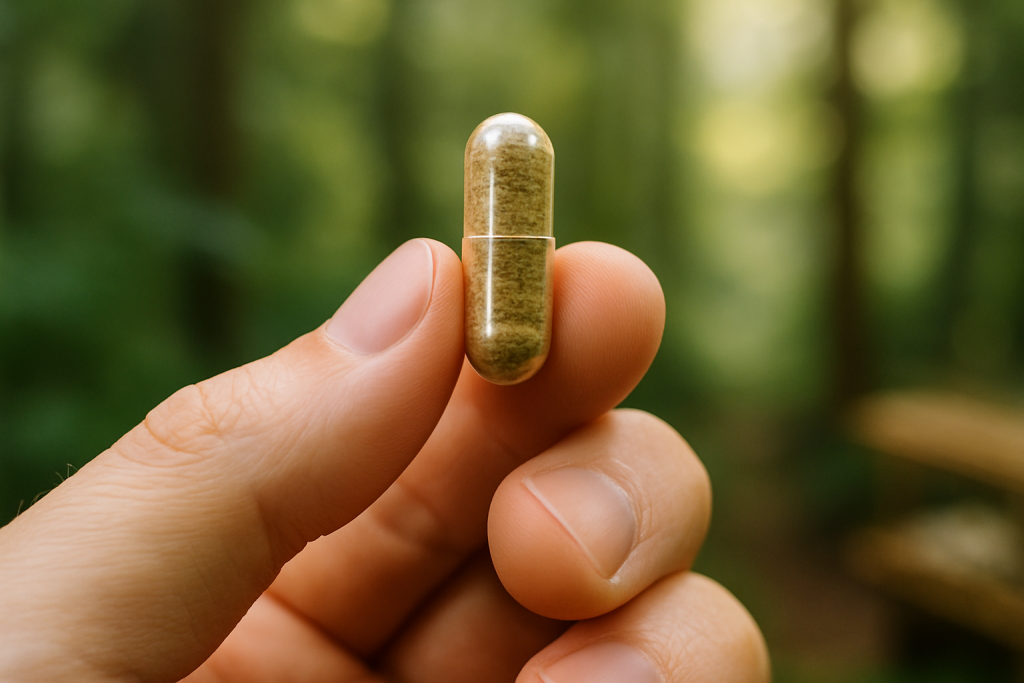
Mushroom Capsules
Microdose capsules stand out for their precision and discretion, making them particularly suitable for busy professionals and detail-oriented individuals. Capsules integrate effortlessly into your daily routine, providing a subtle yet sustained effect lasting four to six hours.
When considering shroom edibles vs capsules, capsules clearly offer greater discretion, as they lack distinctive taste, smell, or attention-drawing packaging. They’re also sugar-free and have zero calories. Overall, they’re an excellent choice for those who prioritize a controlled, systematic approach to microdosing.
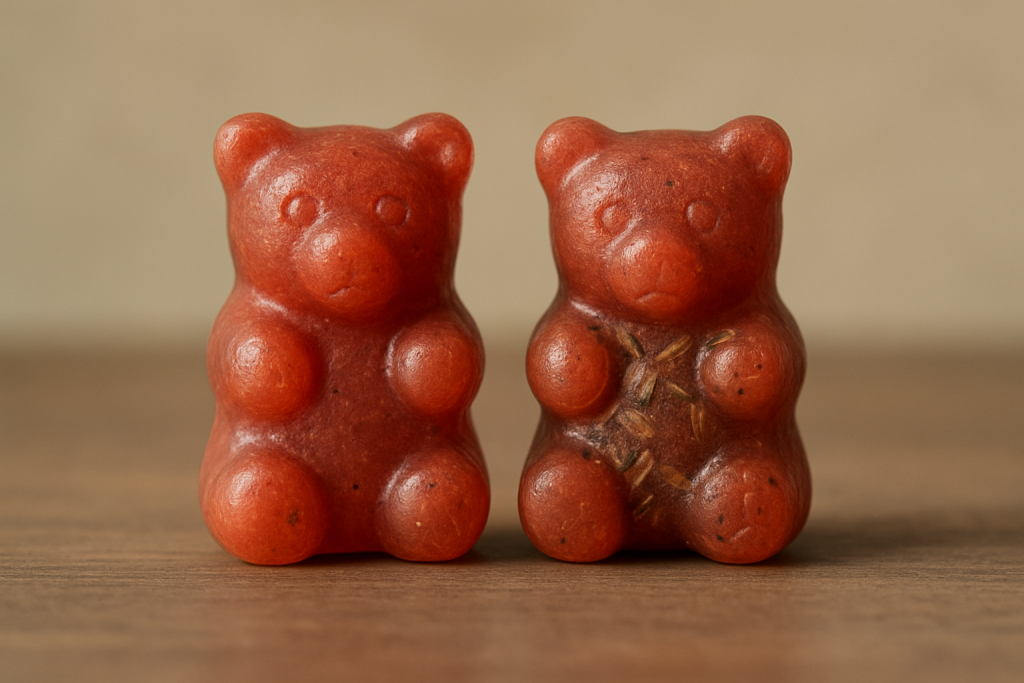
Mushroom Gummies: Convenience and Flavourful Fun
Mushroom gummies offer distinct advantages in convenience, taste, and onset speed. Gummies typically take effect faster—usually within 20 to 40 minutes—and come pre-dosed in approximately 250 mg servings.
Perfect for festivals, hikes, or daily adventures, gummies have a delicious fruity taste (blue raspberry and pineapple) that effectively masks any mushroom flavour. They’re especially popular among those new to microdosing due to their pleasant taste and easy consumption. However, gummies contain sugar, making them less ideal for individuals monitoring dietary intake closely. Lastly, they should be securely stored away from children and pets.
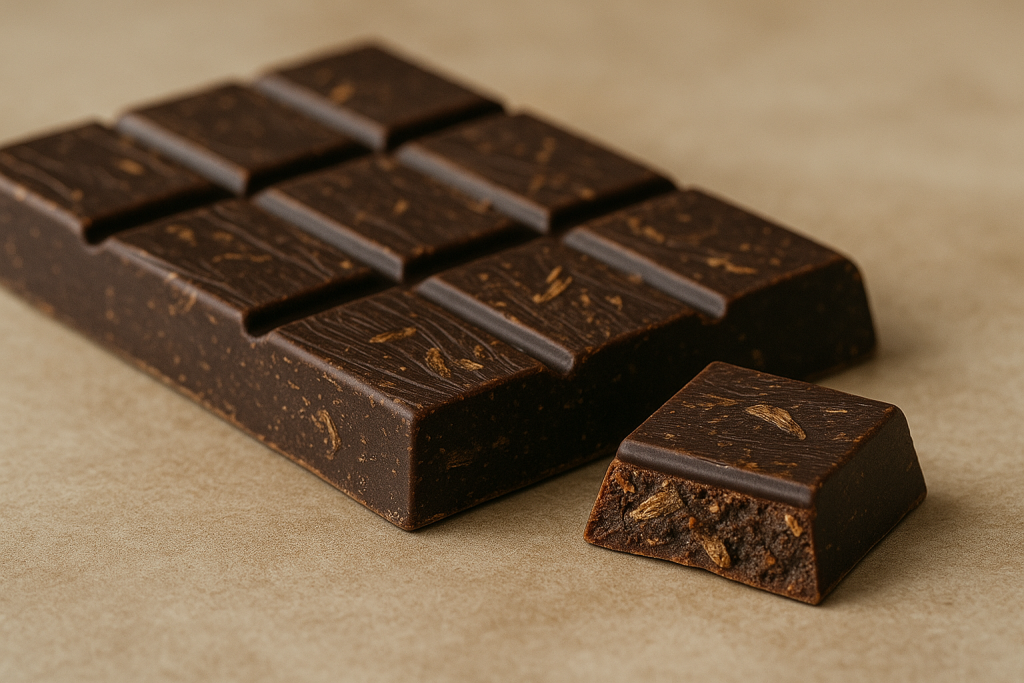
Microdose Mushroom Chocolates: Decadent and Mindful
When considering mushroom gummies vs chocolates, chocolates present a luxurious, mindful option. Path Supply’s microdose mushroom chocolate products like the Awaken bar feature gourmet flavours such as espresso and adaptogenic herbs, enhancing the overall microdosing experience.
Chocolates offer a gradual onset, typically within 45 minutes, and their natural cocoa butter content may extend the duration of effects, providing a smooth experience. The chocolate format allows intuitive dosage adjustments by simply breaking off additional squares, although dosage will therefore be less exact.
Ideal for relaxed weekends, creative pursuits, or mindful activities, chocolates offer sensory indulgence coupled with therapeutic benefits. Keep in mind that chocolates may melt easily in warmer temperatures and contain more calories and sugar compared to capsules. Also, keep them stored in a secure place and away from children.
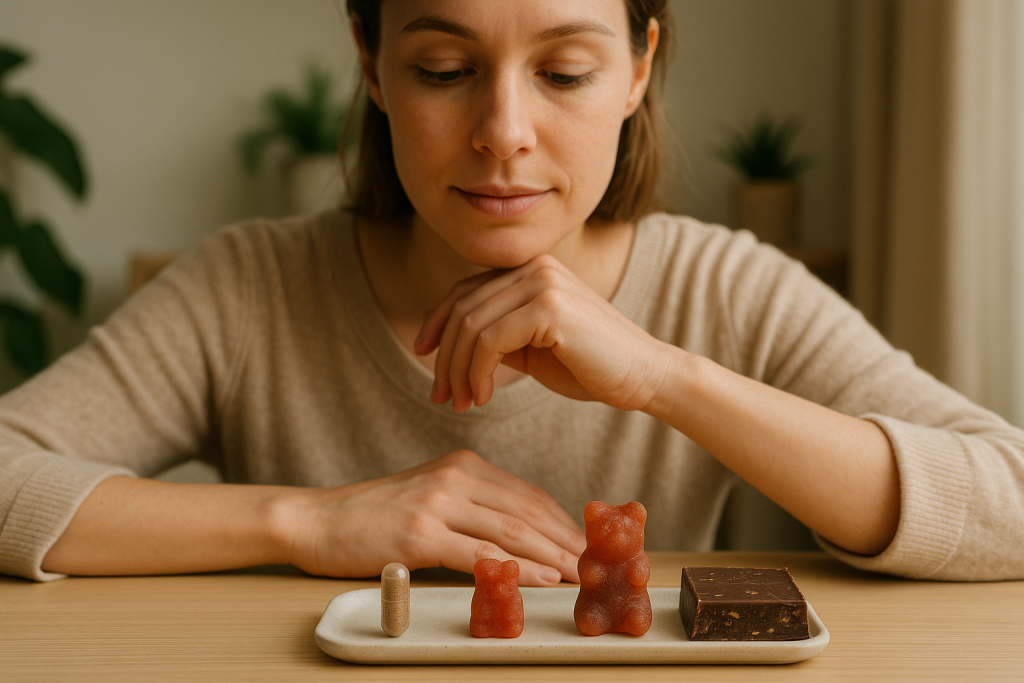
Choosing the Best Microdosing Method for Your Lifestyle
To decide among mushroom gummies, capsules, and chocolates, consider your lifestyle, personal preferences, and goals:
Busy professionals and those requiring discreet, precise dosing often favour capsules. Creatives and those who enjoy mindful indulgence frequently choose chocolates, while active individuals typically prefer gummies for their convenience and appealing flavour.
Many microdosers combine methods, opting for capsules during workdays for precision and using gummies or chocolates on weekends for leisure.
Tips for Optimizing Your Microdose Experience
Regardless of your preferred method, effective microdosing involves understanding dosing and onset times. Gummies typically offer the quickest onset, followed by chocolates, then capsules. Each method generally provides subtle yet consistent effects lasting four to six hours.
To enhance benefits, consider pairing psilocybin with functional mushrooms such as lion’s mane or cordyceps. Maintaining hydration and eating lightly after dosing can smooth your microdosing experience.

Your Microdosing Journey Awaits
Ultimately, the best method depends on your personal lifestyle and preferences. Whether you’re weighing mushroom gummies vs capsules, exploring microdose mushroom chocolate, or considering other magic mushroom edibles in Canada, Path Supply provides trusted, quality products to support your microdosing journey.
Choose the method that resonates most with your lifestyle and discover the transformative potential of microdosing mushrooms today.
Learning how to store magic mushrooms isn’t just about convenience — it’s essential for preserving potency and avoiding mold. Heat, moisture, and light can quickly degrade psilocybin or ruin your stash. Whether you’re storing fresh shrooms, dried mushrooms, or infused products like chocolates, proper storage helps keep them safe and effective.
But here’s the thing: storing loose mushrooms is tricky — and many Canadians are choosing encapsulated microdoses instead (or edibles), for a safer, more consistent experience. We’ll show you how to store your shrooms the right way… and explain why PATH’s lab-verified products mean you don’t have to worry about it at all.
Why Proper Storage of Magic Mushrooms Matters
Learning how to store your magic mushrooms correctly is the key to preserving their potency and preventing mold. Psilocybin (the active compound) can break down over time, especially if exposed to heat, moisture, or light. Improper storage might leave you with weak or spoiled shrooms – and nobody wants that.
By following a few simple best practices, you’ll ensure your mushrooms stay effective and safe to consume for as long as possible. Remember, fresh mushrooms are perishable (think of them like produce), while dried mushrooms can last months or even years with the right care.
Let’s dive into the how-to’s so you can store your shrooms like a pro.
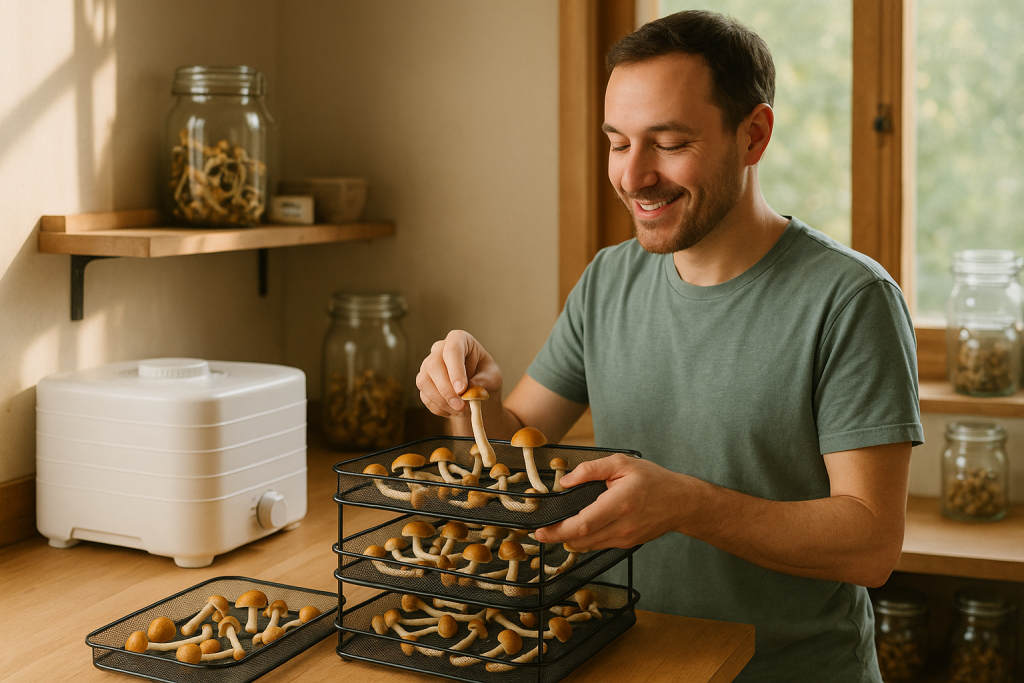
Keep Them Dry: Moisture Is the Enemy
The number one rule of magic mushroom storage: keep your shrooms dry. Moisture is the nemesis of psilocybin products – it invites mold and degrades potency. Always thoroughly dry fresh mushrooms before storage (more on drying later). Dried mushrooms should be “cracker dry” – meaning they snap, not bend. Any residual dampness can lead to nasty mold or loss of “magic.”
Store dried mushrooms in an airtight container to lock out humidity. Good options include sealed glass jars (mason jars are a favorite), vacuum-sealed bags, or food-grade plastic containers with tight lids. Throw in a desiccant pack (those little silica gel packets you find in packaged goods) for extra protection. Desiccants absorb any sneaky moisture that might be lurking, keeping your shrooms crisp and dry.
(Tip: Save the silica packets from snack packages or vitamin bottles and reuse them for your mushrooms.)
If you’re storing fresh mushrooms short-term, never seal them wet. Wrap fresh shrooms in a paper towel and place in a paper bag or breathable container in the fridge. The paper will wick away excess moisture. Don’t wrap or pack fresh mushrooms too tightly – they need a bit of air to prevent moisture buildup. Even in the fridge, fresh mushrooms only last a few days to a week before they start getting slimy or moldy. Plan to use fresh ones quickly or dry them for longer storage.
Common moisture mistakes to avoid: Storing mushrooms (fresh or dried) in a damp environment, in unbreathable plastic bags with water droplets, or in a refrigerator without a paper towel. Moisture condensing on your shrooms is a bad sign – it can make dried mushrooms go soft and invite contaminants. If you ever see fuzzy mold, black/green spots, or smell a mildew odor, toss those mushrooms out – they’re no longer safe to consume.
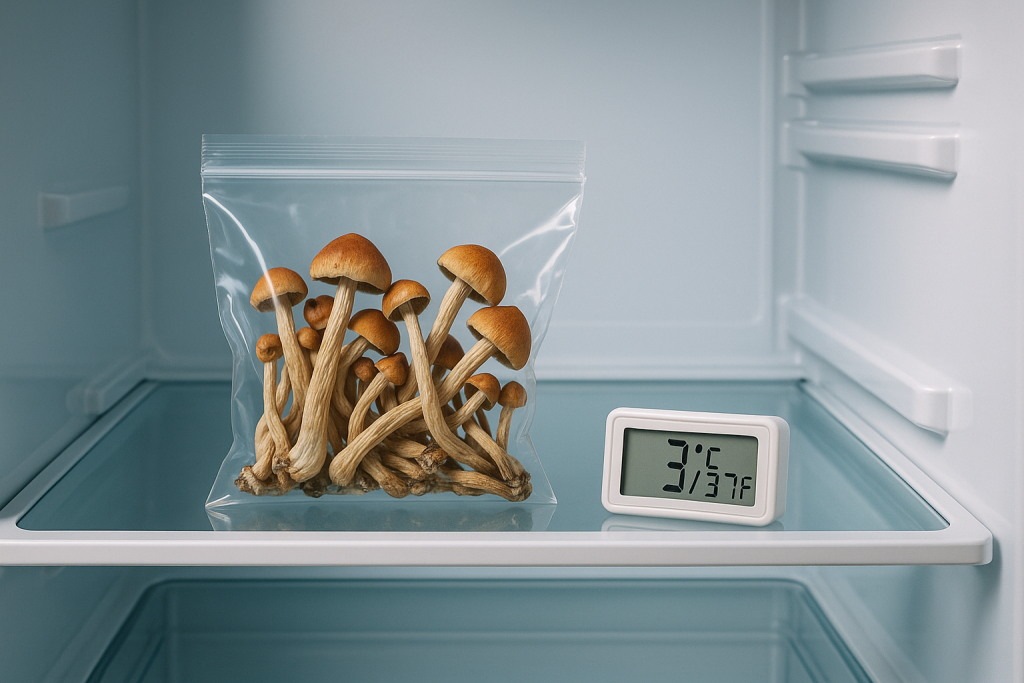
Chill Out (But Avoid the Deep Freeze)
Temperature also plays a big role in maintaining potency. Magic mushrooms prefer things cool, but not freezing. Heat can break down psilocybin, so never store your stash in a hot place (like next to a heater or in direct sun). Aim to keep your mushrooms in a cool room or pantry, ideally below about 21°C (70°F). At cooler temps, the active compounds degrade much more slowly.
What about the fridge or freezer? For fresh mushrooms, refrigeration is smart – it will extend their life by a few extra days compared to room temp. Just use the paper bag method mentioned earlier and keep them around 2-4°C (a typical fridge setting). This slows decomposition and mold growth, buying you maybe a week or two tops before fresh shrooms go bad.
For dried mushrooms, refrigeration isn’t necessary if they’re fully dried – they do fine at room temperature in a sealed container. In fact, one lab study found that dried mushrooms stored at room temperature in the dark had the least loss of active compounds, whereas freezing fresh mushrooms caused the most rapid potency degradation.
Freezing dried mushrooms is an optional strategy for storing shrooms long-term, but proceed with caution. Some experienced psychonauts swear that storing bone-dry shrooms in the freezer keeps them potent for years. Others warn that freezing can damage the mushroom cells and delicate compounds if any moisture is present. Ice crystals = bad news for psilocybin.
If you do choose to freeze: only do it for thoroughly dehydrated mushrooms (ideally cracker dry via a food dehydrator). Use an airtight vacuum-sealed bag or jar to prevent condensation. And when you take them out of the freezer, let the container come to room temp before opening (to avoid moisture condensing on the cold shrooms). Freezing fresh, wet mushrooms is definitely a no-go – they’ll turn to mush and lose potency fast. For most people, a cool cupboard works perfectly for dried shrooms, no freezer necessary.
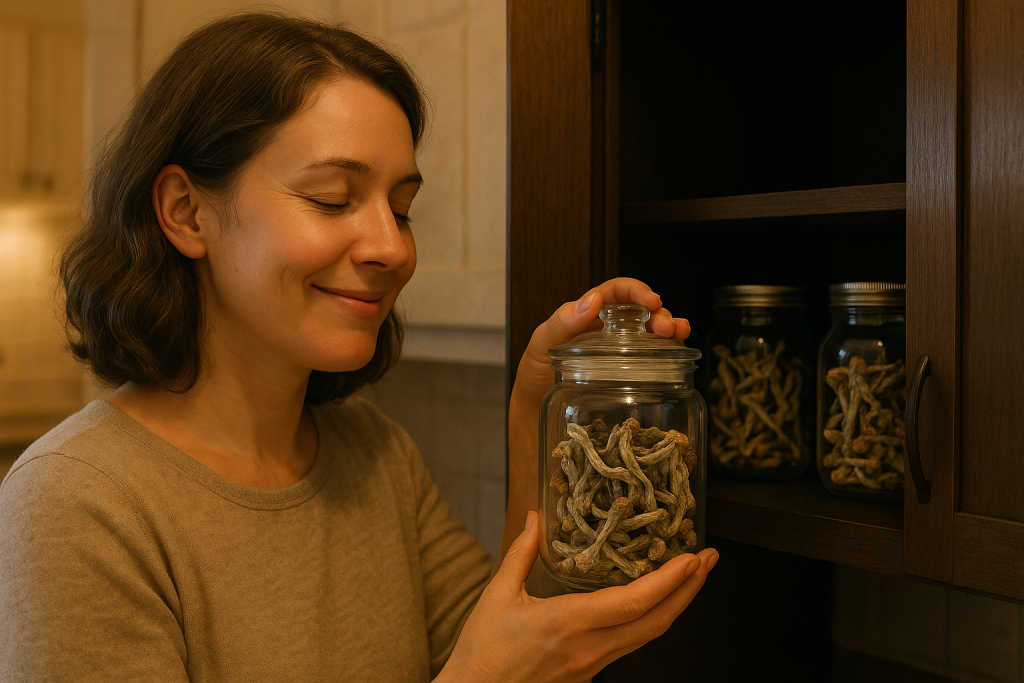
Block the Light
Just like a vampire, your mushrooms hate sunlight. UV rays and bright light degrade psilocybin over time. Ever notice how certain meds or supplements come in dark amber bottles? That’s to protect light-sensitive contents – and your shrooms deserve the same treatment. Store your stash in the dark: an opaque or tinted container, or a solid box in a closet. If you only have clear jars, no worries – simply keep them in a dark cabinet or wrap the jar in aluminum foil to keep light out.
This applies to all psilocybin products, from dried mushrooms to infused goodies. Light won’t make them “expire” overnight, but over weeks and months it can reduce their strength. UV light in particular breaks down psilocybin’s molecular structure, diminishing the “magic” in your mushrooms. So do your shrooms a favor and turn off the lights – they prefer a cool, dark resting spot (imagine a cozy cave or a Las Vegas hotel room with the blackout curtains drawn).
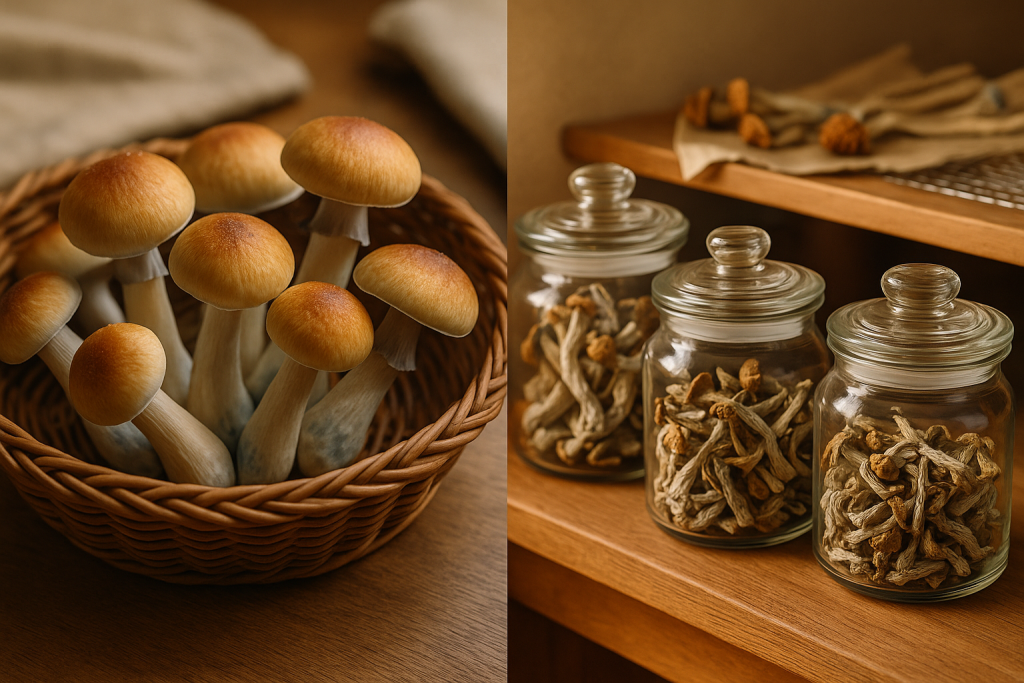
Storage Basics for Fresh vs. Dried Shrooms
Fresh and dried mushrooms need different storage approaches. Here’s a quick guide for each:
Storing Fresh Magic Mushrooms
Freshly picked (or purchased) magic mushrooms are highly perishable – they’re about 90% water and will start decomposing almost immediately at room temperature. If you’re not consuming them right away, refrigeration is a must.
Even with perfect fridge conditions, expect fresh magic mushrooms to last only about 3-7 days before they start to deteriorate.
Storing Dried Magic Mushrooms
Once mushrooms are properly dried (completely cracker dry), they become far more resilient and easy to store long-term. Dried magic mushrooms can retain potency for a year or two, or even longer, if stored under ideal conditions. The key is protecting them from the big three we covered: moisture, heat, and light.
For dried shrooms, airtight containers are your best friend. Many folks use mason jars with tight lids. Food-safe plastic tubs or silicone containers can work too, as long as the seal is truly airtight.
Why PATH capsules are safer, more consistent, and hassle-free
One of the biggest challenges with loose mushrooms isn’t just how to store them — it’s knowing what you’re actually taking. Different parts of the mushroom, like caps and stems, and even different mushrooms in the same batch can have very different psilocybin levels. That means every time you reach into your jar of dried shrooms, you could end up with a wildly inconsistent experience.
At PATH, we solve that problem by blending large, carefully dried batches of mushrooms before encapsulating them. This ensures that every capsule delivers a consistent, balanced microdose, so you always know what to expect. No guessing, no surprises — just reliable results you can trust.
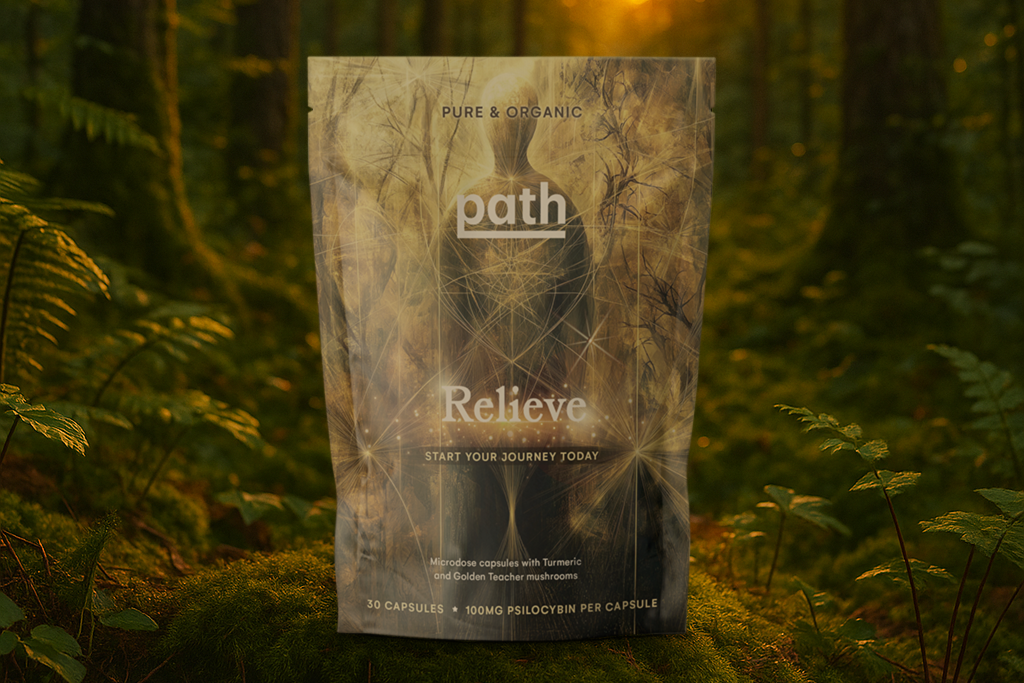
On top of that, our capsules are airtight, lab-verified, and shelf-stable for up to a year when stored at room temperature. You don’t have to worry about mold, moisture, or potency loss the way you would with loose mushrooms. With PATH’s capsules, you get peace of mind, convenience, and a consistent journey every time.
Some of the popular forms Path offers include:
- Microdose Capsules: Path’s magic mushroom capsules are pre-portioned microdoses of dried Psilocybe mushrooms. Each capsule contains a small, standardized amount of psilocybin – enough for subtle benefits without overwhelming effects. These capsules are designed for discreet, convenient daily use, making it easy to microdose for beginners or busy professionals. A typical bottle has ~25 capsules (about a month’s supply), so you can store your microdoses in one secure container rather than handling loose mushrooms.
- Psilocybin Chocolate Bars: Path also infuses psilocybin into gourmet chocolate bars divided into microdose-friendly squares. These decadent bars mask the mushroom taste with rich cocoa and adaptogenic herbs, offering a tasty, easy-to-store treat. You can keep a bar in a cool, dry place and simply break off a square for a controlled dose whenever you want – no messy mushroom handling required.
Magic Mushroom Gummies: For those who prefer something fruity, Path offers chewable psilocybin gummies in fun flavors like Blue Raspberry and Pineapple. Each gummy provides a consistent microdose and is formulated to promote relaxation, focus, and a positive mood. These gummies make microdosing feel as easy as enjoying a fruit snack – perfect for anyone put off by the earthy taste of raw mushrooms or the idea of swallowing capsules. They come in a resealable package for easy storage, and their candy-like form ensures no strong mushroom odor or flavor while stored.
The Smart Way to Store and Enjoy Magic Mushrooms
Properly storing magic mushrooms can be tricky, especially with fresh or loosely dried shrooms. Thankfully, PATH makes this process effortless. By choosing PATH’s mushroom capsules and other convenient formats like chocolates and gummies, you ensure consistent dosing, maximum potency, and hassle-free storage. Embrace the simplicity, reliability, and safety of encapsulated mushrooms—allowing you to confidently explore the benefits of psilocybin without the stress.
Make your journey smoother. Choose your path.
In the last couple of years, there’s been a surge of interest in alternative treatments for mental health issues. And one that has definitely garnered a lot of attention is psilocybin therapy.
Psilocybin, you ask? It’s a naturally occurring compound found in certain species of mushrooms, often referred to by the intriguing moniker – ‘magic mushrooms.’ These aren’t your average grocery store mushrooms, that’s for sure.
The heart of this therapy lies in its unique approach. It harnesses the mind-altering properties of psilocybin, aiming to alleviate various mental health disorders. It’s like taking a wild, psychedelic journey with the potential to come out the other side feeling better. Sounds pretty cool, right?
As interest spikes and more research emerges on the potential benefits of psilocybin, it’s essential to understand what this therapy is all about and how it might help those struggling with mental health issues.
Microdosing Psilocybin: Easing into Treatments
As an approach that’s becoming increasingly recognized in the field of psilocybin therapy, microdosing essentially involves taking small, sub-hallucinogenic doses of psilocybin mushrooms at regular intervals. These doses are intentionally kept small enough to prevent triggering intense psychedelic experiences, such as hallucinations, typically associated with higher doses. Instead, the goal is to influence mood, cognition, and perception subtly yet positively.
Microdosing psilocybin (within a therapeutic context) is believed to be beneficial for individuals who may not be ready or willing to experience a full psychedelic trip. However, this approach should always be overseen by a qualified healthcare provider or therapist who can monitor the patient’s response and adjust the dosage as required.
Maximizing the Benefits of the Most Potent Psilocybin Mushroom
Venturing further into the realm of psilocybin therapy, the spotlight inevitably falls on the most potent psilocybin mushroom. The mushroom in question is the Psilocybe azurescens which contains a high concentration of psilocybin and psilocin, the compounds responsible for the mushrooms’ psychoactive effects.
Compared to its counterparts, Psilocybe azurescens has a much more elevated concentration of psilocybin. For a clearer understanding, while the average psilocybin mushroom contains about 0.2% to 0.4% psilocybin, Psilocybe azurescens can contain up to 1.8%. This implies it’s approximately four to nine times more potent than most other psilocybin mushrooms.
Psilocybe Azurescens: The Most Potent Psilocybin
The high psilocybin content in Psilocybe azurescens can lead to more profound psychological effects, which can be beneficial in therapy settings. For instance, it may facilitate deeper self-exploration or induce a more significant shift in mood and perspective.
As the most potent psilocybin type of magic mushroom, the Psilocybe azurescens presents a unique blend of benefits and challenges in psilocybin therapy. While its high psilocybin content can trigger deeper therapeutic experiences, it also calls for careful dosing and professional oversight.
As we continue to dive deep into the domain of psilocybin therapy, the role of Psilocybe azurescens and other potent psilocybin mushrooms will undoubtedly remain a point of fascination.
What does the future look like for Psilocybin Therapy?
The benefits of Psilocybin Therapy extend beyond the immediate effects of the psychedelic experience. It has shown promise in treating a range of mental health conditions, including depression, anxiety, and PTSD. Research has also shown that psilocybin can promote neuroplasticity, the brain’s ability to form new connections and adapt to new information. This increased neuroplasticity can lead to lasting improvements in mood, cognition, and overall mental well-being.
As the popularity of Psilocybin Therapy continues to grow, it’s essential to tread cautiously. While the therapy has shown promise in treating various mental health conditions, it’s not suitable for everyone. Individuals with a history of psychosis or certain medical conditions may not be suitable candidates for this therapy. It’s key to consult with a healthcare professional before consuming psilocybin, regardless of your particular medical history.
All in all, the future of Psilocybin Therapy looks promising, with the potential to offer lasting improvements in mood, cognition, and overall mental well-being. As we continue to explore this new frontier, it’s crucial to prioritize safety and ensure that this therapy is accessible to those who stand to benefit the most.
us about magic mushrooms’ legal status in Canada? Canadian adults interested in mental wellness and microdosing are watching a story unfold that’s eerily similar to cannabis pre-2018 – grey-market dispensaries are popping up, local authorities are reacting in very different ways, and federal law hasn’t quite caught up. The result is a patchwork of tolerance and enforcement that varies wildly by province and even city.
So, how are people buying microdose capsules or mushroom gummies from Canadian sites? Below, we’ll break down the provincial outlook – highlighting local attitudes, notable incidents, and what’s happening in 2025 – so you can understand the magic mushroom laws by province. We’ll also touch on how you can pursue your microdosing journey safely and discreetly, with Path Supply’s lab-verified products available for delivery across Canada.
(Note: Nothing in this guide is legal advice. It’s an educational, adventure-forward overview to help you navigate the mushroom landscape. Always use your best judgment and stay within the law.)
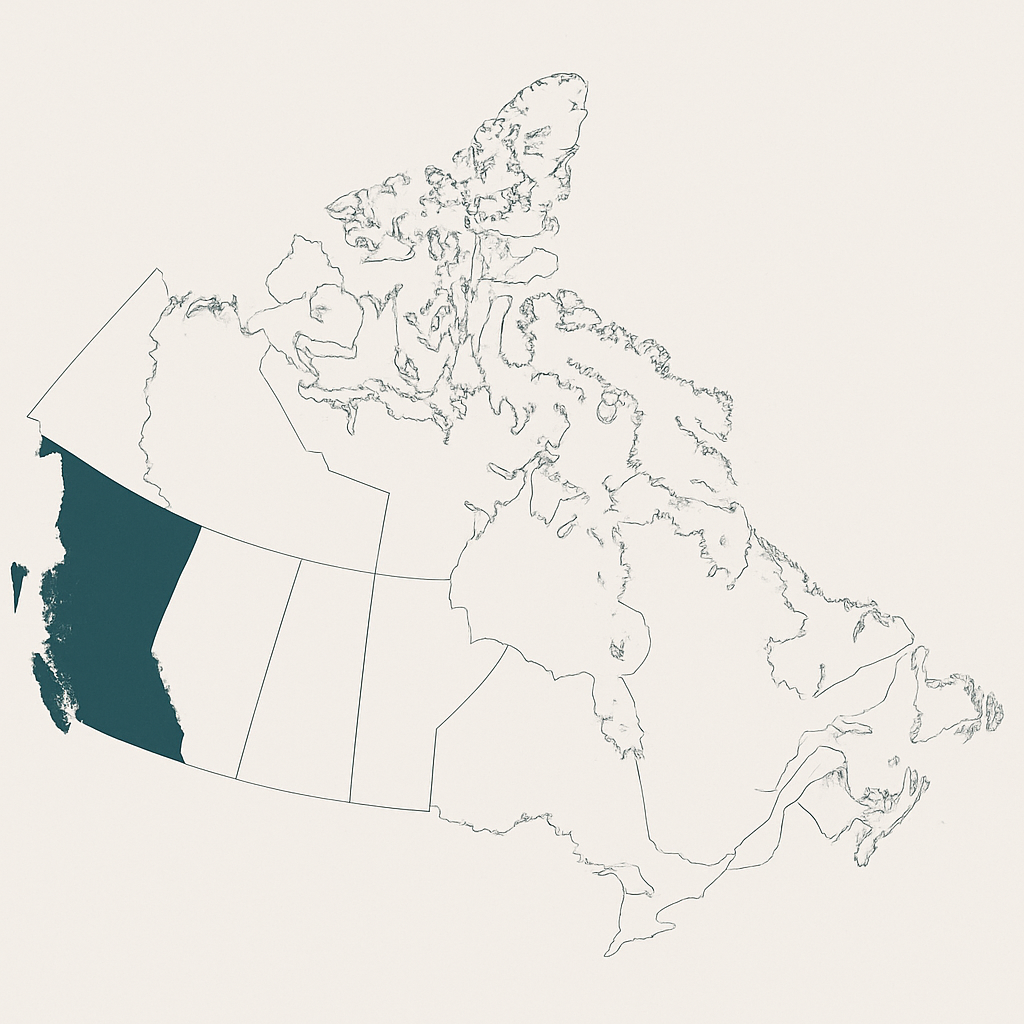
British Columbia (BC): West-Coast Tolerance and “Shroom Boom”
British Columbia is known for its West-Coast good vibes – and when it comes to psilocybin, BC (especially Vancouver) is leading the pack in open tolerance. Vancouver’s Grey-Market Dispensaries: In Vancouver, a “shroom boom” has been underway. Entrepreneurs like Dana Larsen have openly run mushroom dispensaries in the city for years as an act of civil disobedience. Officially, psilocybin is banned in BC just like everywhere else. However, Vancouver police have generally treated mushroom dispensaries as a low priority. They tend to focus on opioids and dangerous drugs causing overdose crises rather than raiding every shroom shop. Some raids have occurred, but often only after complaints or high-profile attention.
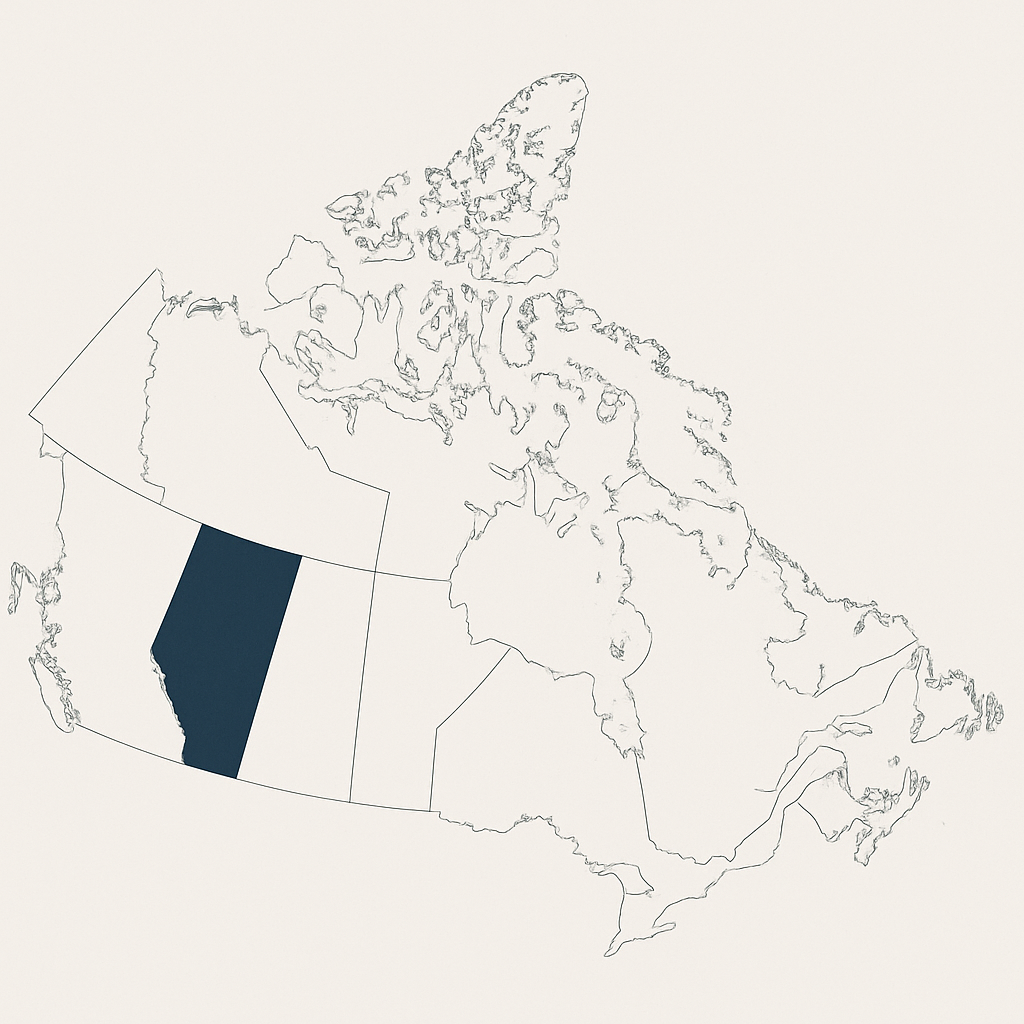
Alberta: Strict Laws with a Twist – Regulated Therapy
In Alberta, you won’t find open mushroom dispensaries on main street – the province has not developed a grey market scene like BC or Ontario. Culturally, Alberta is more conservative on drug policy, and any retail sales of psilocybin would likely be shut down promptly by law enforcement. Magic mushrooms remain illegal to buy, sell, or possess here, just as federally mandated.
Where Alberta has taken a pioneering step is in the realm of medical use. In January 2023, Alberta became the first Canadian province to regulate psychedelic-assisted therapy for mental health. Only licensed psychiatrists (in accredited medical facilities) can provide psychedelic treatment in Alberta, and patients need a doctor’s referral. Essentially, Alberta is getting ready for a future where psilocybin might be an approved treatment – ensuring safety standards are in place now. This forward-thinking policy shows Alberta’s growth-minded approach in a controlled medical context, even as recreational use remains banned.
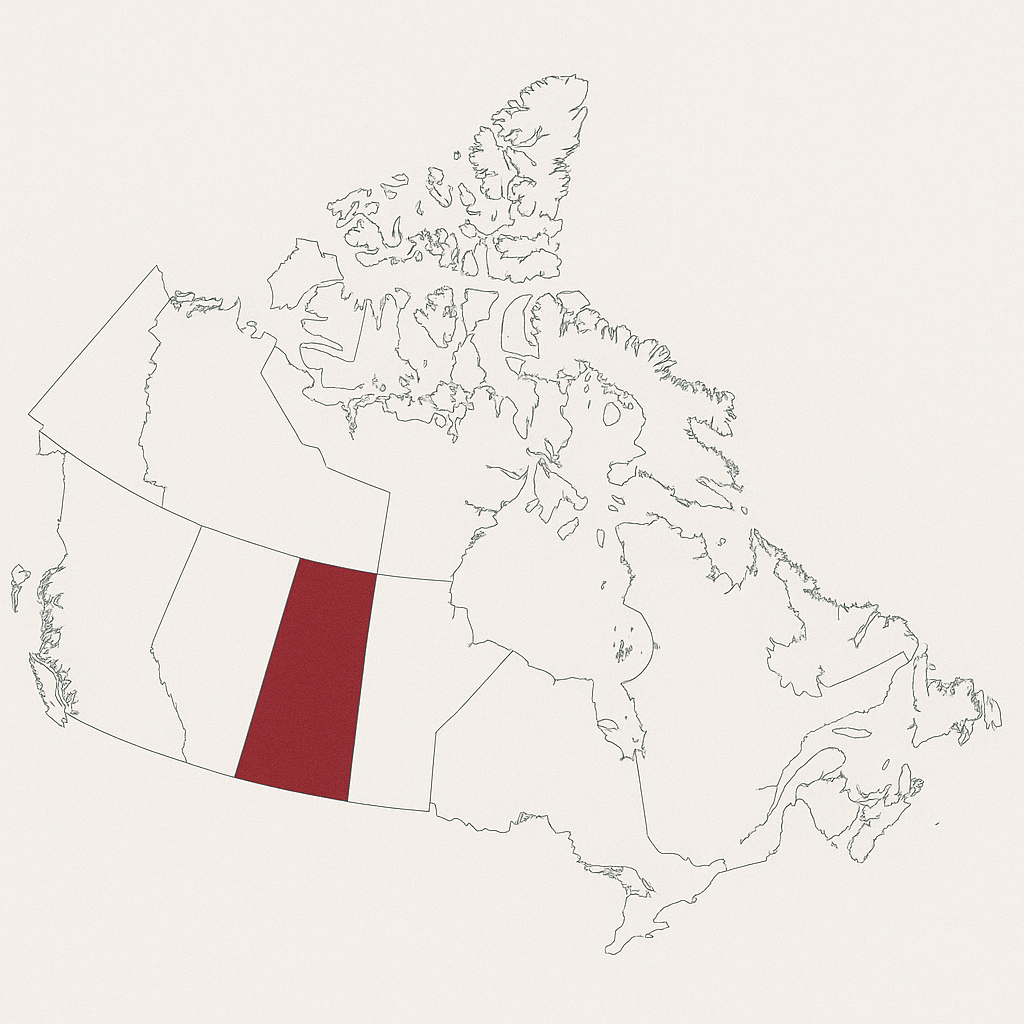
Saskatchewan: Low Profile and Caution
Saskatchewan has kept a low profile in the magic mushroom conversation. There have been no known psilocybin dispensaries operating openly in cities like Saskatoon or Regina as of 2025. The province’s stance aligns fully with federal law: psilocybin is illegal, period. Law enforcement in Saskatchewan has not faced the same public pressure or grey-market activity seen elsewhere, so mushrooms remain largely underground here.
If you live in Saskatchewan, assume that any possession or sale of magic mushrooms could result in criminal charges, just as with any controlled substance. There isn’t a visible “microdosing scene” or advocacy movement pushing local authorities for tolerance. That said, interest in wellness and microdosing exists everywhere – it’s just more private here. People curious about psilocybin typically either travel to places like BC for a psychedelic retreat or use online sources to obtain products (which is risky and illegal).
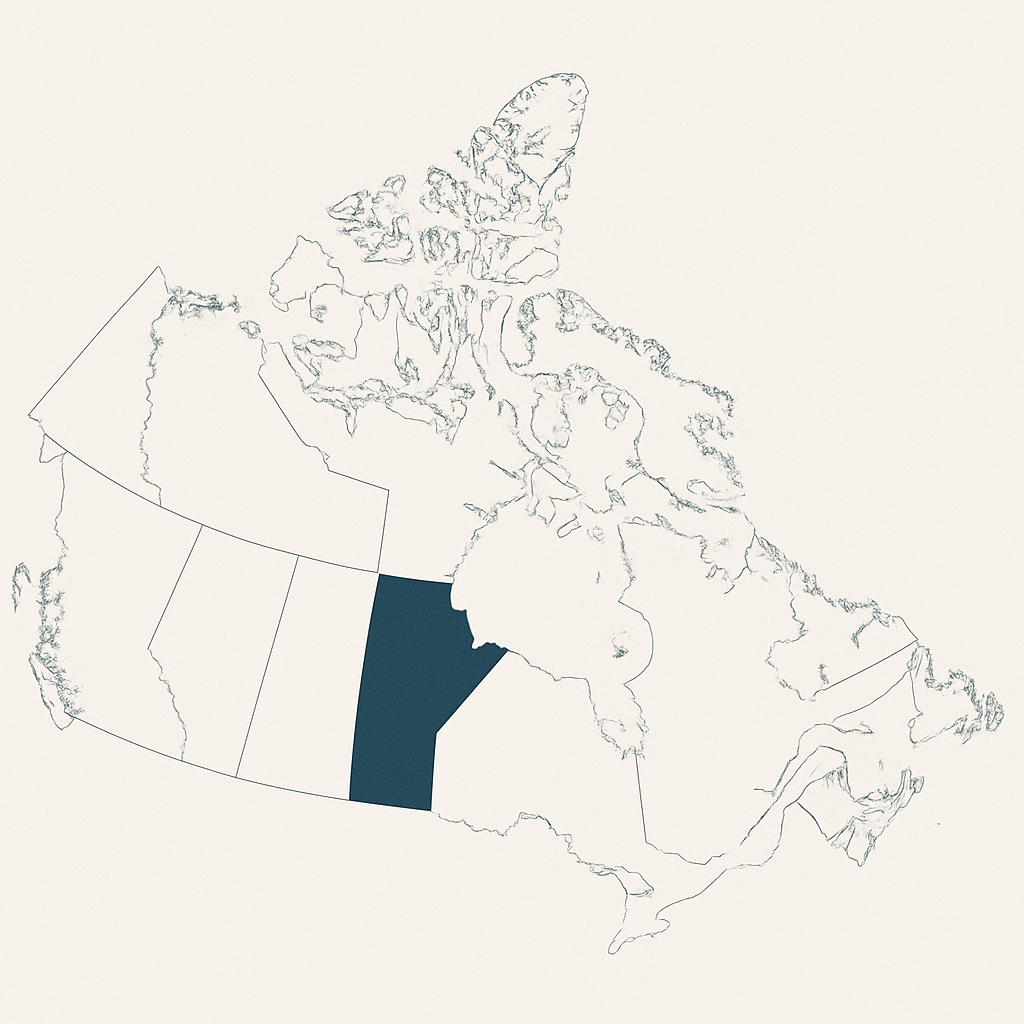
Manitoba: A Budding Grey Market in Winnipeg
Manitoba has started to see hints of the magic mushroom trend, mainly in its capital. In 2023, Winnipeg got its first taste of a psilocybin storefront when a shop quietly opened selling mushroom products. This was part of the wave of dispensaries appearing across Canada.
As of 2025, no known physical mushroom dispensaries are openly running in Manitoba. Authorities are likely to treat any new psilocybin shop as a priority target (similar to how they handle illicit cannabis or other drug sales). Possession of magic mushrooms remains illegal, and being caught with significant quantities could lead to trafficking charges.
However, Manitobans interested in microdosing haven’t simply vanished. Many have likely turned to online sources. Grey-market websites based in other provinces will ship to Manitoba, advertising everything from microdose capsules to mushroom chocolate bars. Path Supply, for instance, serves Manitoba with lab-verified microdose capsules and gummies, shipped in unmarked packages for privacy.
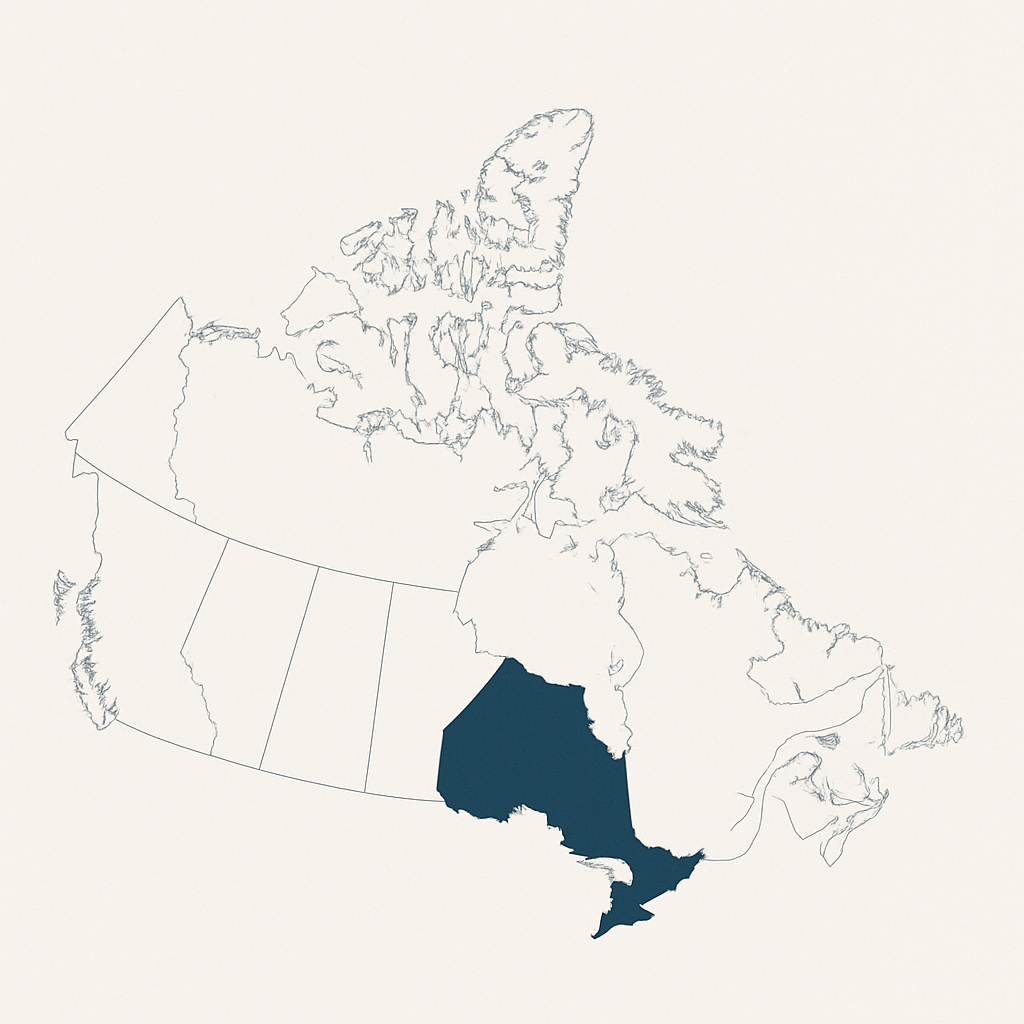
Ontario: Canada’s Mushroom Hotbed (and Crackdowns)
Ontario has been a center of the “mushroom boom” – both in terms of entrepreneurs pushing boundaries and police pushing back. In 2022-2024, Ontario saw a surge of grey-market mushroom dispensaries, particularly in Toronto and Ottawa. Boldly named shops like Shroomyz and FunGuyz made headlines by openly selling psilocybin products in major cities. At one point, FunGuyz (which calls itself Canada’s largest mushroom dispensary) was operating at least 17 storefronts in Ontario alone – from big urban centres to smaller towns. This chain and others offered everything from dried mushrooms to microdose pills, essentially creating a parallel retail market under the nose of authorities.
Present Day 2025: No open dispensaries are known to be operating in Ontario. Ontario’s officials have made it clear that while personal possession of a small amount might not ruin your life, any commercial sale of psilocybin will be dealt with as trafficking. However, Ontario remains a huge market of curious wellness enthusiasts. Many Ontarians order from online dispensaries based out of province or operating anonymously.
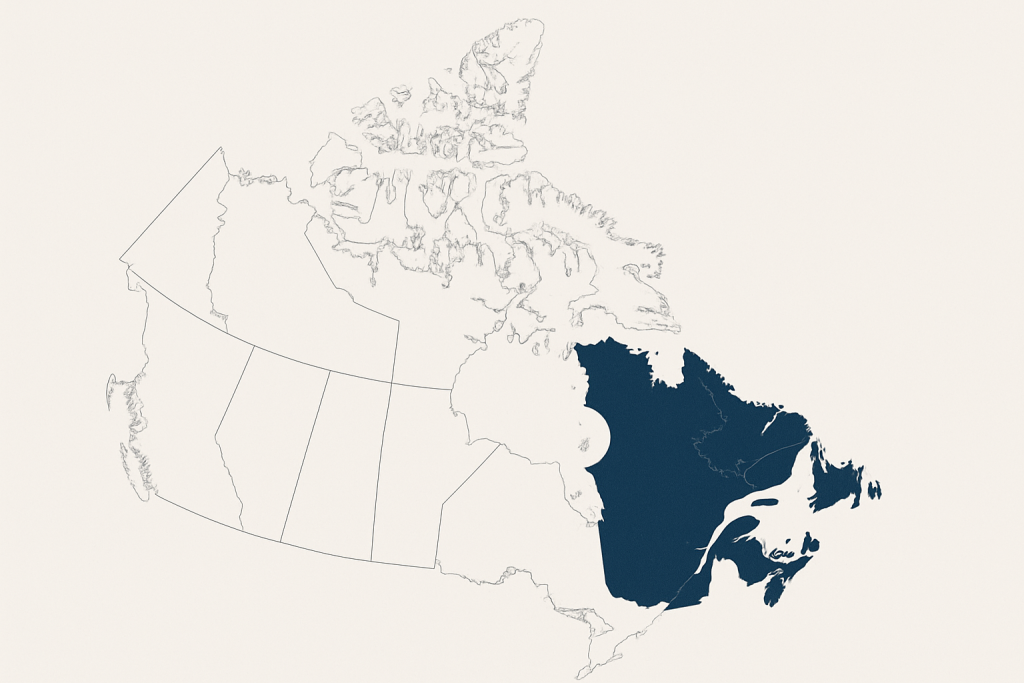
Quebec: Strict Enforcement in “La Belle Province”
Quebec’s approach to magic mushrooms is, in a word, strict. Culturally and legally, Quebec has not shown much tolerance for grey-market psychedelics. Possessing mushrooms for personal use could get you charged; there’s no decrim threshold here.
One positive note: Quebec is home to a growing community of therapists and coaches knowledgeable in psychedelic integration. So while you might not legally obtain mushrooms, you can find support and education in Montreal’s wellness circles about how to approach psychedelics responsibly if you do obtain them. And should you seek a supply, you’d likely be looking at an online order delivered to your door.
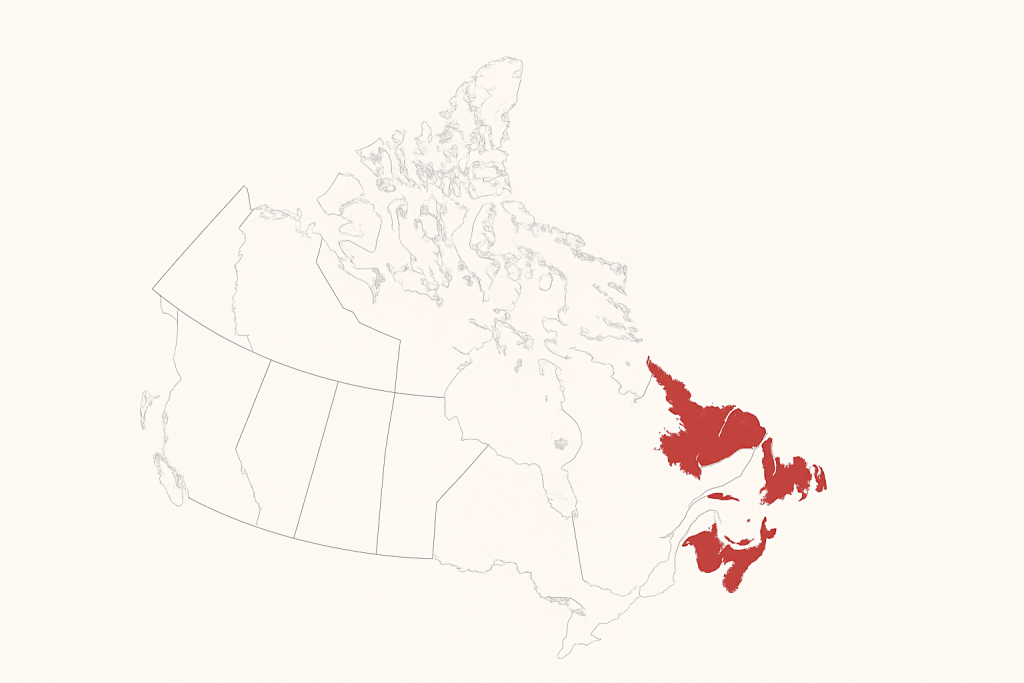
Atlantic Canada (NB, NS, PEI, NL): Quiet Waters, Steady Rules
In Atlantic Canada, the magic mushroom scene is relatively quiet. Provinces like Nova Scotia, New Brunswick, Prince Edward Island, and Newfoundland & Labrador have not seen the same open psilocybin dispensaries as Central or Western Canada. But that doesn’t mean nothing is happening – it’s just below the radar.
For Atlantic Canadians interested in microdosing, the approach tends to be personal and discreet. Without local dispensaries, most turn to either DIY or online ordering. The latter is common because many west-coast or Toronto-based online shroom retailers will ship to Atlantic Canada.
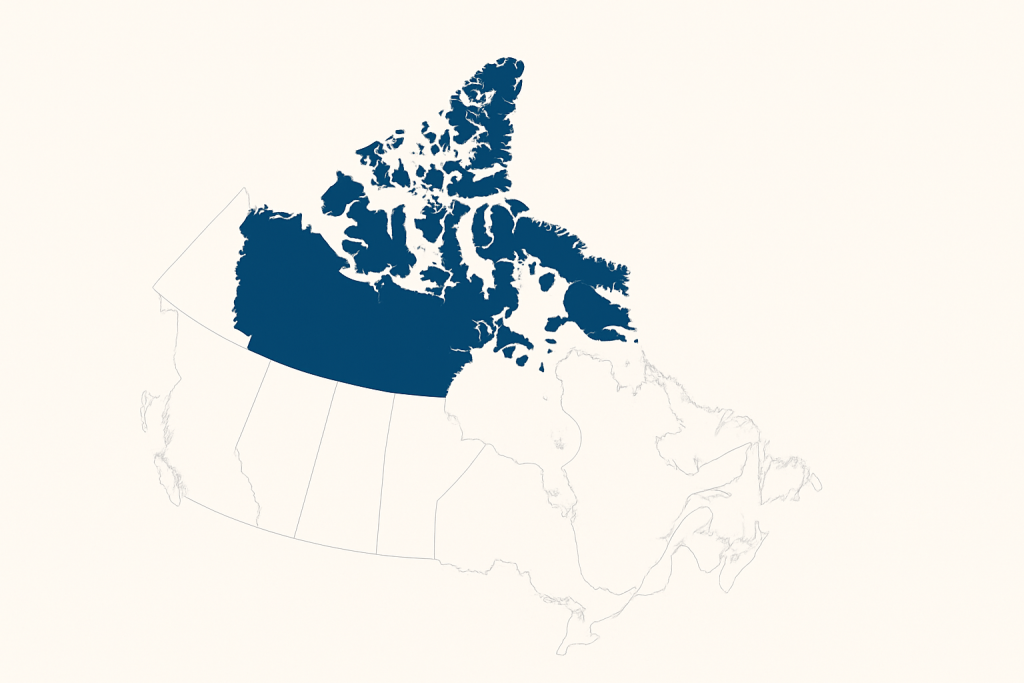
The Northern Territories: (Yukon, NWT, Nunavut)
No discussion of Canada is complete without mentioning the territories. While our title says “by Province,” it’s worth noting that Yukon, Northwest Territories, and Nunavut fall under the same federal laws prohibiting psilocybin. There have been no reports of mushroom dispensaries or open sales in the North. These territories are sparsely populated, and any drug enforcement is handled on a case-by-case basis by RCMP. If anything, interest in traditional Indigenous plant medicine is present, but psilocybin mushrooms are not a native part of northern traditions (aside from modern curiosity). So, in Yukon, NWT, or Nunavut, assume full illegality and low availability.
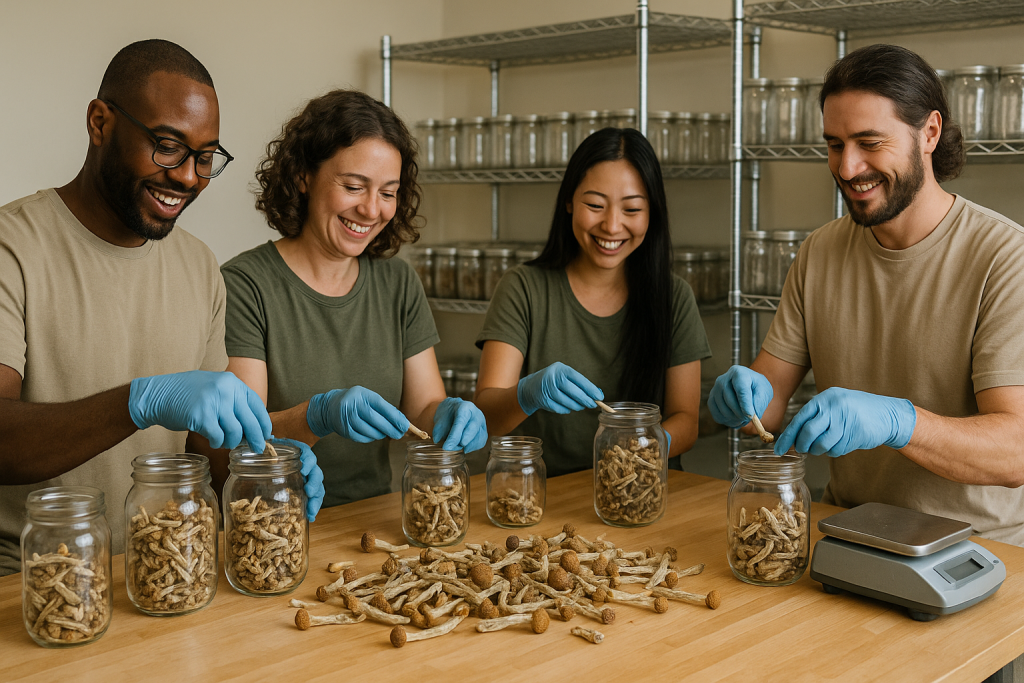
Navigating the Grey Zone
Reading this guide, you might be feeling both excited about the possibilities and cautious about the legal pitfalls. That’s the reality of magic mushrooms in Canada in 2025 – it’s an adventure with grit. The good news is, you can explore the benefits of microdosing and psychedelic wellness in a way that minimizes risk. Here are a few coaching tips to guide you on your path:
- Stay Educated: Laws can change, and new research is emerging every month. Keep up with credible sources (Health Canada updates, local news, and trusted wellness blogs) for the latest on psilocybin regulations. Knowing your province’s stance (as we’ve outlined above) helps you make informed decisions.
- Start Low, Go Slow: If you’re microdosing, remember that more isn’t always better. A microdose is typically sub-perceptual – you shouldn’t feel “high” or impaired. By keeping doses low, you not only stay safer health-wise, but you’re also less likely to attract any unwanted attention.
- Choose Trusted Products: One of the biggest concerns in this grey market is quality control. That’s where Path Supply shines. As a West-Coast, science-driven brand, Path Supply offers 100% organic, lab-verified mushroom products – including microdose capsules, artisan chocolates, and fruity gummies. Each batch is third-party lab tested for purity and precise psilocybin content, so you know exactly what you’re getting (no surprises, no scary trips). This data-driven approach appeals to those of us who value natural wellness backed by evidence. Plus, everything is vegan and gluten-free, aligning with the ethical, health-conscious lifestyle many microdosers strive for.
- Discreet Delivery: Path Supply provides coast-to-coast discreet shipping. Whether you’re in a downtown Toronto condo or a cabin in the Yukon, your order arrives in unmarked, smell-proof packaging. This means you can get your microdose regimen delivered without broadcasting it to neighbors or postal workers.
Respect the Law (and Know the Risks): Our official stance is always to stay within legal bounds. We acknowledge, though, that many readers will choose to explore psilocybin despite the prohibitions – much like Canadians did with cannabis in the years before legalization. If that’s you, understand the potential consequences. Small possession charges are possible (though relatively rare for tiny personal amounts). What’s tolerated in one city might get you in trouble in another, so use this guide whenever you travel inter-provincially as well.
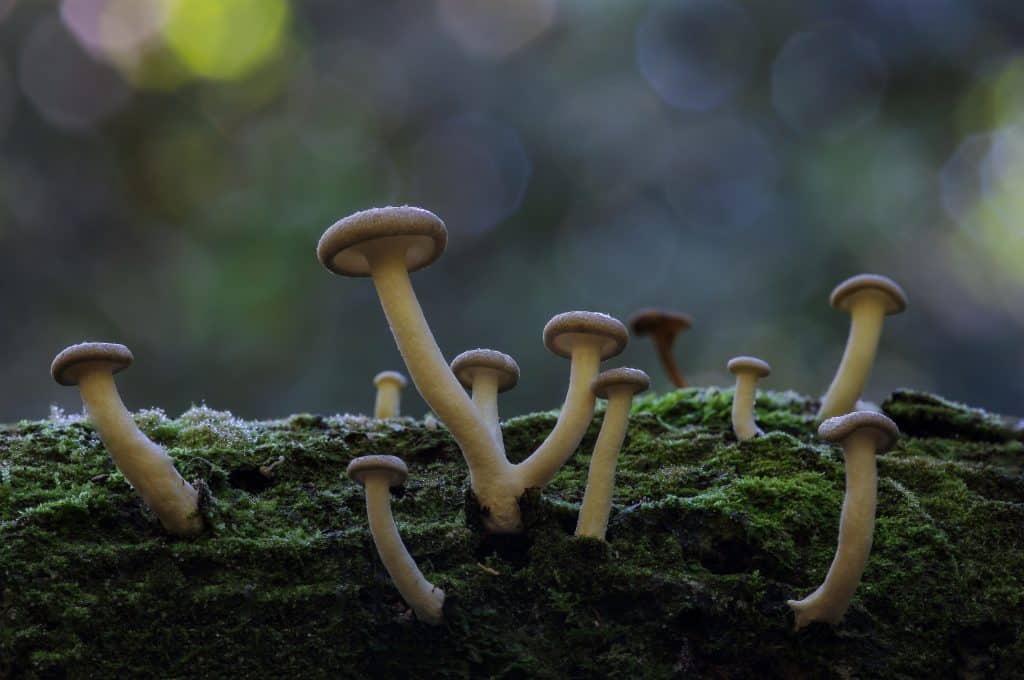
Looking Ahead
The legal status of magic mushrooms in Canada is evolving, much like a mushroom growing quietly underground before popping into the light. In 2025, we’re still in a bit of a limbo: federally illegal, provincially unenforced in spots, harshly shut down in others. It’s a dynamic landscape. But public sentiment and scientific research are trending towards acceptance of psychedelics for therapeutic use. We may well see changes in the next few years – perhaps more provinces adopting medical regulations like Alberta, or even a push for decriminalization of personal possession (there are activists and court cases in motion, so keep an ear out).
For now, knowledge is your ally. By understanding the legal nuances across provinces, you can navigate your psilocybin journey more confidently. Whether you’re microdosing for mood and focus, or contemplating a macro dose for spiritual insight (in a safe setting), always honor the “set and setting” – including the legal setting! That might mean taking that trip in a province where you feel safer, or timing it when you’re tucked away in nature with trusted friends.In the end, this isn’t just about laws – it’s about empowering you to make informed choices. The world of psychedelics can be exciting and transformational, but it comes with responsibilities. Carry the adventure-forward, growth-minded spirit with you, and you’ll not only stay on the right side of the law (most of the time), but also on the right side of your personal wellness journey.
Happy microdosing, and choose your path wisely!
In the heart of Canada’s lush landscapes, a world of enchantment thrives – magic mushrooms, a fascinating gift from Mother Nature herself. Embarking on the journey of growing these mystical fungi in your own space is a remarkable experience connecting you with the Earth’s wonders.
In this guide, we’ll explore the captivating realm of magic mushrooms, delving into their appearance, the art of cultivating psilocybin mushrooms, and discovering the natural habitats where these treasures flourish.
The Appearance of Magic Mushrooms
Before you begin your magical cultivation journey, it’s essential to recognize what magic mushrooms look like. These extraordinary fungi exhibit diverse shapes, sizes, and colours. From the iconic “fly agaric” with its red cap and white dots to the slender-stemmed, caramel-coloured Psilocybe cubensis – magic mushrooms showcase nature’s creativity.
The appearance of magic mushrooms is a testament to the richness of biodiversity. They often have distinct features such as bell-shaped caps, gilled undersides, and an earthy aroma. Their appearances can vary greatly based on species, making each encounter with these mystical organisms a unique experience.
Nurturing Psilocybin Magic: A Step-by-Step Guide
How to Grow Psilocybin Mushrooms
Now that you’ve familiarized yourself with the appearance of magic mushrooms, it’s time to roll up your sleeves and delve into the cultivation process. Growing psilocybin mushrooms requires careful attention, patience, and a genuine connection with nature’s cycles. Here’s a step-by-step guide to help you along the way:
Research and Choose a Strain
Begin by researching various psilocybin mushroom strains that are well-suited for Canadian climates. Consider growth conditions, temperature preferences, and growth cycle duration.
Prepare the Growing Environment
Magic mushrooms thrive in controlled environments. Set up a growing space that allows you to regulate temperature, humidity, and light. Many cultivators opt for indoor setups to have more control over these conditions.
Obtain Substrate and Spores
Prepare the substrate – the material on which the mushrooms will grow. This could be a mix of vermiculite, brown rice flour, and water. Acquire mushroom spores from reliable suppliers, ensuring you adhere to local regulations.
Inoculation and Colonization
In a sterile environment, introduce the mushroom spores to the substrate. This marks the beginning of the colonization process, during which mycelium – the vegetative part of the fungus – spreads through the substrate.
Provide Optimal Conditions
Maintain the growing environment’s temperature and humidity levels according to the requirements of your chosen strain. Regularly mist the substrate to ensure adequate moisture.
Fruiting and Harvesting
As the mycelium network develops, tiny pins – the beginnings of mushroom caps – will emerge. Continue to provide the necessary conditions; soon enough, these pins will mature into fully-grown mushrooms. Gently harvest them when the caps have opened but are not releasing spores.
Reflect and Rejuvenate
Cultivating magic mushrooms is not just about the end product; it’s also a journey of mindfulness and patience. Take moments to reflect on the interconnectedness of life and the natural world as you nurture these enchanting organisms.
Seeking the Natural Habitats of Magic Mushrooms
Where Do Magic Mushrooms Grow?
While cultivating magic mushrooms indoors can be rewarding, understanding their natural habitats adds another layer of appreciation for these incredible fungi. In Canada, various species of magic mushrooms thrive in specific environments:
Forests and Woodlands
Many psilocybin mushroom species have an affinity for wooded areas, where moisture and decaying organic matter are abundant. Exploring forests and woodlands in Canada might unveil hidden treasures of magic mushrooms.
Grasslands and Meadows
In regions with open grasslands and meadows, you might encounter psilocybin mushrooms peeking out from the lush greenery. These habitats provide the perfect balance of sunlight and moisture.
Fertile Soil Near Water Bodies
Magic mushrooms often flourish near rivers, streams, and other water bodies due to the consistent moisture in the soil. Keep an eye out for these gems as you venture near aquatic landscapes.
Alpine Regions
Some resilient magic mushroom species have adapted to alpine conditions. If you’re an adventurous soul, exploring higher altitudes might lead you to discover unique fungi thriving amidst rocky terrains.
Embracing the Marvels of Cultivation and Nature
Embarking on the journey of growing magic mushrooms is a testament to your curiosity and appreciation for the natural world. As you learn to recognize their enchanting appearances, master the art of cultivation, and explore their native habitats, you deepen your connection with the intricate tapestry of life surrounding us. May this guide inspire you to embark on this magical adventure, nurturing the mushrooms and your profound relationship with nature. Remember, with each step, you’re not just cultivating fungi – you’re cultivating wonder.
In recent years, microdosing has gained traction as a way of boosting focus and increasing productivity. People have reported on the benefits, from psychological gains (e.g. increased creativity and mental clarity) to physiological ones (e.g. boost in energy).
If you’re curious about microdosing shrooms and want to learn more, read on.
- What is microdosing?
- How did microdosing gain popularity?
- What are the benefits of taking magic mushrooms?
- Is microdosing magic mushrooms safe?
- What are the types of magic mushrooms?
- How do you microdose mushrooms?
- What are the effects of magic mushrooms?
- How long does the effect last?
- What are the forms and ways you can consume mushrooms?
- How do you store magic mushrooms and do they go bad?
- Conclusion
What is microdosing?
Microdosing refers to the act of consuming only small doses (usually 1/20 to 1/10 of a regular dose, or 10 to 20 micrograms) of a psychoactive substance for its purported benefits (psychological and otherwise), rather than the “high”, or negative and extreme sensorial effects. These psychoactive substances include magic mushrooms, LSD, cannabis, ayahuasca, and ketamine.
Magic mushrooms (also known as psychedelic mushrooms, shrooms, mushies, blue meanies, philosopher’s stones), belonging to the genus Psilocybe, contain psilocybin (a hallucinogen), one of its major chemical compounds. When consumed, psilocybin metabolizes in the body and converts into psilocin, a psychoactive substance. Psilocybin and the resulting psilocin are the compounds associated with the psychedelic effects magic mushrooms are known for, like changes in perception.
Effects of taking magic mushrooms can be positive and negative, depending on dosage, a person’s mental and physical state, and various other factors. These effects may include hallucinations, synesthesia, spiritual awakenings, mood swings, and enhanced creativity.
Learn more
–LSD vs. Mushrooms: Differences Between Acid and Psilocybin
How did microdosing gain popularity?
In modern times, much has been written about psychedelics, beginning in the 50s, but microdosing was not quite a trend back then.
It started gaining popularity around 2010 in Silicon Valley (from those termed “biohackers”). It was a new way of improving cognitive function and focus, increasing productivity, and boosting energy to take on the challenges of coding.
In 2011, “microdosing” as a term was formally introduced in Dr. James Fadiman’s book, The Psychedelic Explorer’s Guide: Safe, Therapeutic, and Sacred Journeys. With his book, Dr. Fadiman went into detail about the subculture of psychedelic use, and specifically, provided more information about consuming smaller doses of psychedelics (as opposed to regular or larger doses). Use cases covered indigenous cultures, to modern professionals such as scientists who test its purported therapeutic effects.
The publication of the book, in part, resulted in a spike in awareness and interest for microdosing. The book also included practical information for those curious to try it out, including steps on how to microdose.
Microdosing gained more steam with the help of productivity guru, Tim Ferriss. Ferriss-best known for his best-selling 2007 book, The 4-Hour Workweek, and is now also famous for his lifestyle blog and podcast-interviewed Dr. Fadiman in 2015. With this episode, listeners of the podcast (a considerably large audience interested in productivity, lifestyle design, and entrepreneurship) began experimenting on their own with microdosing and shared their experiences. This helped spread more awareness and resulted in much coverage in the media about the then burgeoning topic. Consequently, media coverage also widened its reach, not only to those in Silicon Valley, but to a more mainstream audience interested in productivity and wellness. Now, it has become one of the ways to enhance one’s daily routine, not for the “high”, or as an escape from the ordinary, but for the mental and physical benefits.
What are the benefits of taking magic mushrooms?
To understand the interest in microdosing magic mushrooms is to focus on its purported benefits.
Much of the reported benefits are based on anecdotal evidence or surveys and as such, should be taken with a grain of salt. In one survey, almost 80% claimed that they noticed improvements on their mental health after microdosing. In another survey, respondents noticed a decrease in anxiety and depression, and an increase in levels of creativity and productivity.
Learn more
–Mushroom microdosing for anxiety and ADHD
–Mushrooms for depression
As surveys, these are not scientifically rigorous tests and there is no way to ensure that strict guidelines were observed in regard to dosage, usage, and the various factors that can affect one’s perceived effects.
Other than that, there’s a chance that respondents might have also experienced the placebo effect – the belief that a substance was effective due to one’s pre-existing thinking that it would work. This doesn’t mean that the effect can be directly attributed to the substance itself.
Nevertheless, some of those who have microdosed claim that it gives rise to certain psychological gains, such as boosts in focus and creativity, increased spiritual awareness, general improvement in mood, better eating and sleeping habits, improved personal efficiency, decreased anxiety, and better social skills. There are even reports that it may help with inflammation.
As of now, research on microdosing is still relatively new and limited, so we can’t know for certain its efficacy and relation to the reported benefits.
Some studies, which include clinical trials, have also attempted to test it as a potential treatment for neuropsychiatric disorders like anxiety, depression, obsessive-compulsive disorder, post-traumatic stress disorder, and addiction.
Here’s a snapshot of some studies that have been conducted:
- Researchers at Johns Hopkins reported an 80 percent abstinence rate among a group of longtime smokers who took psilocybin as part of their cognitive behavioral therapy. Even addictions, such as smoking, might be overcome with psilocybin.
- Researchers from the same institution report that it may be an effective treatment for substance addictions (e.g. nicotine and alcohol) and depression.
- Some studies have also shown that for those with life-threatening cancer diagnoses, microdosing shrooms helped alleviate emotional distress.
- One study found that it may help treat headaches (and might be as effective or more effective versus conventional medicine).

Is microdosing magic mushrooms safe?
Because scientific data is limited and much of the reported benefits are anecdotal or from first-hand experiences of those who have taken it (or results from surveys), those intending to try out microdosing need to be vigilant.
There are also no studies so far on its long-term effects, so it is important to avoid heavy and daily use. There is a potential heart risk for those that take too many shrooms in the long-term. One effect associated with long-term shroom use has been a change in personality. However, Health Canada currently authorizes Psychedelics for medical purposes, which may mean that a controlled consumption leads to health benefits for medical conditions like anxiety and depression.
One such bad effect is unintended trips (and “bad” trips), likely induced by an accidental intake of a higher dose of shrooms. When you go from a microdose to a regular dose, you might feel one, or some, of a myriad of side effects, like paranoia, hallucinations, nausea, drowsiness, headaches, nervousness, yawning, and panic. The effect may be even more intense for those under the influence of alcohol.
A term that is used in psychedelic experiences is “set and setting”. These are the factors that can affect your magic mushroom experience. “Set” refers to your state of mind and emotional wellness, whereas “setting” refers to your environment. Both can affect your experience positively or negatively.
Another possible outcome from microdosing shrooms is the negative side effects. This includes increased anxiety, difficulty sleeping, headaches, and physical discomfort.
Note that daily microdosing is also not recommended as it may lead to tolerance similar to coffee/caffeine. After a while, your body might get used to the dosage and require you to take higher doses in order to feel an equivalent effect.
Of the information that we currently have, there are both good and bad reported effects, but clearly not enough to claim one way or the other. Until more research is done (including its potential for helping those with mental disorders), we need to exercise caution and be extra mindful when it comes to microdosing shrooms.
What are the types of magic mushrooms?
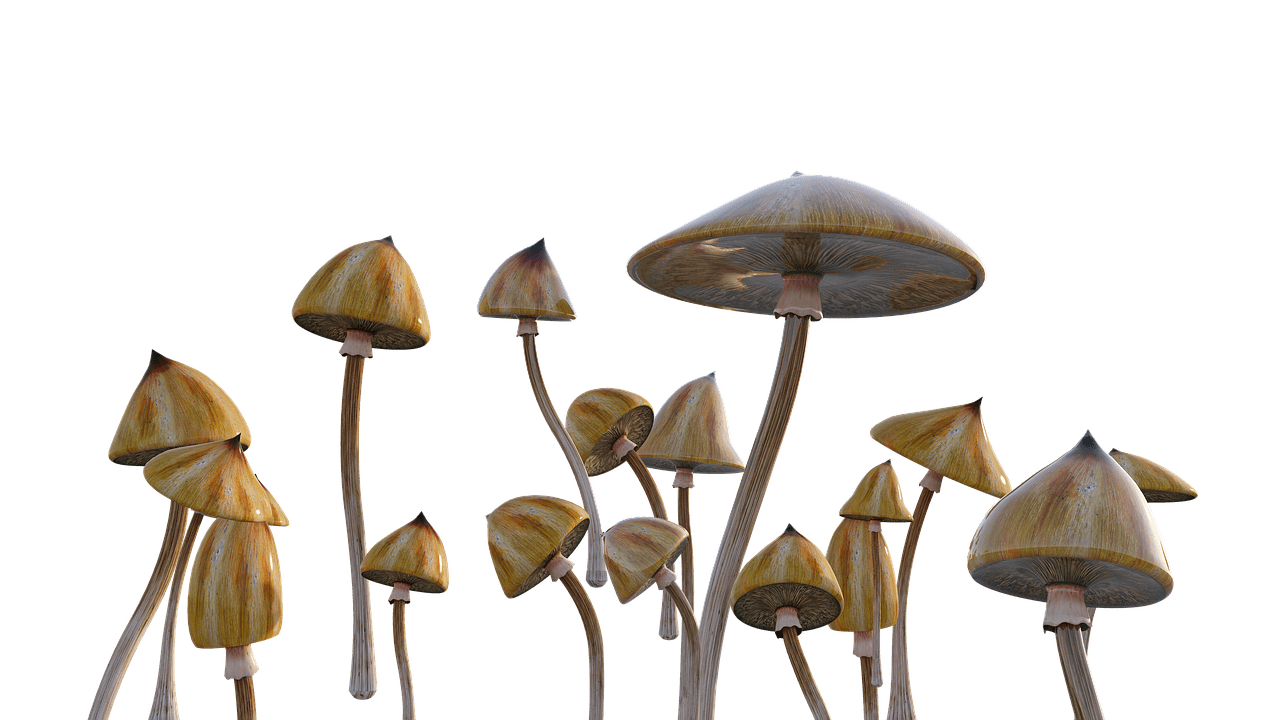
There are different types or strains of magic mushrooms. Psilocybe Cubensis, or “Golden Teacher” mushrooms, is the most common strain. Other types of psychedelic mushrooms are Psilocybe Semilanceata (“Liberty Caps”), Psilocybe Cyanescens (“Wavy Caps”), Psilocybe Azurescens (“Flying Saucers”), and Psilocybe Tampanensis (“Magic Truffles”, “Philosopher’s Stone”).
Most magic shrooms are light brown, have long and thin stems, and have dark brown caps. Some shrooms, when picked off, results in blue bruising, meaning the stems turn into a blue shade (an indicator that it contains psychoactive compounds).
Although naturally occuring in the wild, synthetic versions of psilocybin can be created.
How do you microdose mushrooms?
For first timers, be very mindful and test out in low dosages and spread out intake. Make sure to set aside plenty of time, if not a whole day. There should be enough time allotted for recovery and if possible, take a day off from work or other commitments. Ideally, there should also be someone there with you who can look out for you, in a safe and comfortable environment.
Try out microdoses once every 3 days, vigilantly observe the effects daily, and document your observations. Many find mornings are a great time to consume microdoses of magic mushrooms so that they can make the most out of the effects throughout the day. Taking it at night is not advised as it may have negative effects on one’s sleep.
Microdosing is meant to be more of an enhancement to one’s routine so you should not significantly alter your usual routine. It needs to be integrated into your regimen seamlessly and not be the cause of a complete shift.
Here are some general guidelines for magic mushroom dosage, mostly based on Dr. Fadiman:
Day 1 – Take a microdose (usually 1/20 to 1/10 of a regular dose, or 10 to 20 micrograms) of magic mushrooms.
Days 2 to 3 – Do not take mushrooms and diligently document your observations.
Avoidance of substance tolerance (and needing higher doses to induce a similar effect) and the possibility of experiencing effects days after initial intake are why it’s recommended that there are gaps between doses.
Day 4 – Take another microdose.
Barring any negative effects, continue the process 2 times per week for several weeks. Higher doses are reserved only for when you do not feel negative effects and once you are more comfortable. Be careful when increasing dosages. As they say, “start low and go slow.”
The effects may vary depending on the person, so regular note-taking is crucial. The effect may also be less on a full stomach.
Reported effects have been observed both on the day of microdosing (such as an hour or two after ingestion) and days afterward. Some have reported that the effects may be felt for up to 6 hours (peaking around the 2nd or 3rd hour after consumption). Jot down observations both in the short-term and long-term, be it psychological, physiological, or in social behavior.
What are the effects of magic mushrooms?
The most frequent effects of magic mushrooms are:
- Euphoria, followed by wellbeing
- Sensitiveness to images and sounds
- Pupil dilatation
- Changes in mood, consciousness and perception
- Nausea and vomiting
Many effects may vary per person, size, weight or general health condition.
How long does the magic mushroom effect last?
Though the duration of the “high” effects of magic mushrooms depends on a number of factors including dosage, potency, each person’s mental and physical condition, a magic mushroom experience usually lasts between 4 and 6 hours. Generally, short-term effects have been observed to usually wear off from 6 to 12 hours after consumption.
Note though that in some cases, it is possible for users to experience long-term changes, such as changes in personality.
The substance might remain in one’s body for up to 6 hours before it is eliminated.
What are the forms and ways you can consume mushrooms?
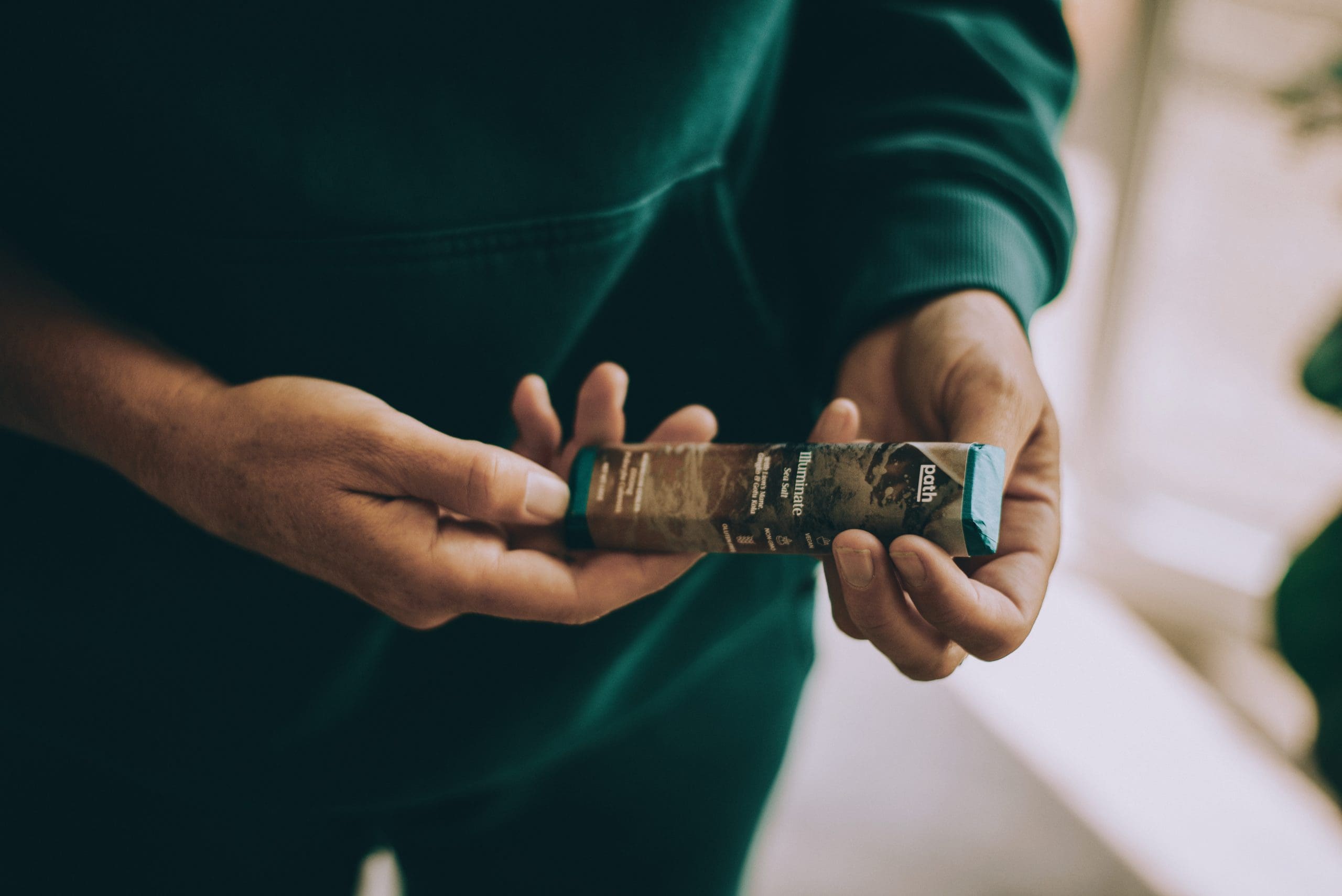
There are several ways to consume psilocybe mushrooms and here are some of them:
Dried mushrooms
These can be consumed by grinding and mixing with other food and drinks. End result can be a smoothie or juice.
Capsules
Some items can be bought as capsules, or you can consider grinding dried mushrooms and placing these in capsules. Effects may take longer to show with this form.
Mushroom chocolates
For a better taste, some mushrooms come as chocolate bars. Shrooms are usually portioned per block of the bar to help manage intake.
Brewed like tea
With this version, the effect of the magic shrooms will be quicker.
Liquid psilocybin
Ingest liberty cap shrooms that come as a clear brown liquid.
Learn more
–Can you smoke mushrooms?
How do you store magic mushrooms and do they go bad?
It has been reported that storing magic mushrooms in the dark at room temperature is the way it is best preserved. Do not store at very cold temperatures as they may degrade quickly.
Shelf life can depend on temperature and lighting. It has been found to degrade over the course of 15 months of storage.
Conclusion
Before you test out microdosing for yourself, here are some additional tips and cautions:
- For best effects, do not rely on microdoses and treat it more as a once-in-a-while advantage that you can tap when in need.
- Always err on the side of caution. Do not microdose too frequently or increase your intake too much.
- Be mindful that varying dosages will induce different durations for the effect and intensities of the experience.
- Microdosing is not an option for those who have mental health conditions (or have undergone trauma) and have children in their care.
- As the effects of substances vary depending on the person, some people may be more vulnerable to experience negative effects than others. If it is your first time, make sure there is someone with you to look out for you.
As with any substance or supplement, consume responsibly. Always err on the side of caution and be careful when you experiment.
References:
- https://www.leafly.ca/learn/psychedelics/how-to-dose-mushrooms
- https://www.leafly.ca/learn/psychedelics/types-of-psychedelics/mushrooms-psilocybin
- https://www.verywellmind.com/what-are-magic-mushrooms-22085
- https://psychable.com/guides/a-beginners-guide-to-psilocybin/
- https://www.healthline.com/health/beginners-guide-to-microdosing
- https://sitn.hms.harvard.edu/flash/2020/can-microdosing-psychedelics-improve-your-mental-health/
- https://www.thecut.com/2018/05/microdosing-guide-and-explainer.html
- https://www.straight.com/living/a-beginners-guide-to-microdosing
- https://doubleblindmag.com/mushrooms/types/psilocybe-cubensis-magic-mushrooms/